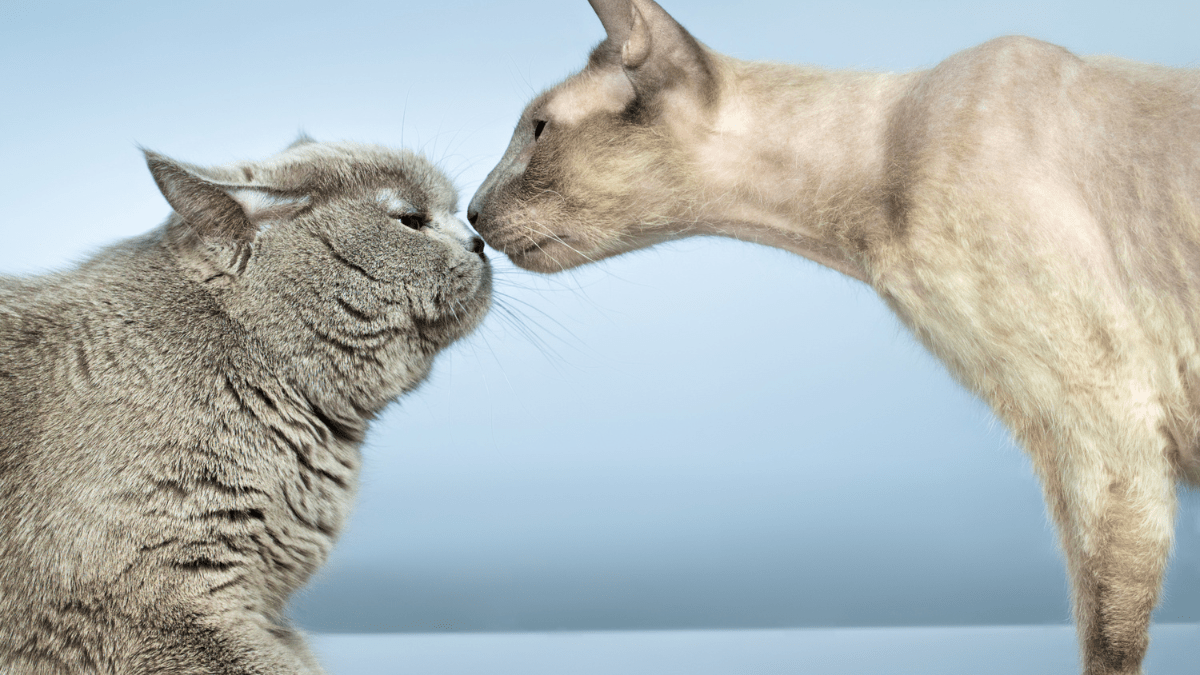
Weeks of patient work are behind you – medical isolation, behavioral isolation, scent swapping, room swapping, and barrier sessions. The cats eat calmly on both sides of the screen, there’s no hissing, no tense bodies. The moment you’ve been waiting for since the very beginning has arrived. The first meeting without a barrier is not the end of the process, however – it is its culmination, requiring just as much attention as every previous stage.
When Are Cats Truly Ready?
This is the most frequently asked question at this stage – and one of the most important ones. Removing the barrier prematurely can, within a matter of seconds, undo weeks of behavioral work.
A first meeting without a barrier is justified when:
-
Both cats eat treats near the barrier over many consecutive sessions without tension
-
During barrier contact there is no hissing, growling, or stiff posture
-
Cats approach the barrier independently out of curiosity, not arousal
-
The new cat is confident and relaxed throughout the entire home
-
The resident cat does not show obsessive focus on the new cat’s presence
If even one of these conditions is not met – return to barrier contact. One extra week of patience is always better than weeks of repairing conflict.
How to Prepare the Space?
The environment matters enormously. Before opening the barrier, ensure:
-
Multiple escape routes – no cat should find itself cornered with no way out
-
High places – shelves, cat trees, wardrobes; a cat that can escape upward rarely resorts to aggression
-
Resources in multiple locations – bowls, litter boxes, and beds positioned so cats don’t need to pass each other to reach them
-
No narrow bottlenecks – tight hallways and narrow gaps between furniture are where conflicts most easily ignite
-
No audience – just you, calm and attentive; no guests, no loud music, no additional stressors
How to Conduct the First Meeting Step by Step
Step 1: Tire the Cats Out Beforehand
Conduct an intense play session with each cat separately – 15–20 minutes with a wand toy. A tired, fed cat is significantly calmer than a hungry, energy-filled one.
Step 2: Feed Both Cats First
Just before opening the barrier, give both cats a meal or treats on their respective sides – at a distance from the barrier. Let them associate this moment with pleasure.
Step 3: Open the Barrier Calmly
Remove the barrier or open the door without drama. Don’t carry the cats toward each other, don’t push them in the other’s direction – allow them to independently decide whether and when they want to approach each other.
Step 4: Observe, Don’t Direct
Your role is observation, not choreography. The cats may sniff each other, walk away, come back, or ignore each other entirely. All of these behaviours are normal. Don’t comment, don’t get visibly excited – stay calm, which the cats will sense.
Step 5: Short and Positive
The first session should last a few to roughly fifteen minutes. End it before either cat begins showing tension. Separate the cats calmly and reward both sides with treats.
What Is Normal During the First Meeting?
Acceptable behaviours:
-
Mutual sniffing – nose, tail, flanks
-
Ignoring each other
-
One cat walks away, the other doesn’t chase
-
Rubbing against furniture in the other cat’s presence
-
Slow, calm movement through the shared space
Behaviours that warrant ending the session:
-
Intense unblinking stare combined with a tense body
-
Continuous growling or hissing
-
An attempt to chase or attack
-
One cat blocking the other’s exit from the room
A single hiss or spit is not a catastrophe – it is communication. Escalating tension, however, is a clear signal to calmly end the session and return to barrier contact.
How to Separate the Cats If a Session Goes Wrong?
Never grab cats with bare hands during a conflict – the risk of bites and scratches is very high, and the cat’s stress will increase further. Instead:
-
Use a large piece of cardboard or a cushion as a barrier between the cats
-
Make a loud, short sound – a clap or stomp – to break their focus
-
Redirect attention with a toy thrown to the side
-
Calmly and slowly step between the cats and give each the space to retreat
After an unsuccessful session, give the cats time to settle – a few hours in their respective spaces – before trying again.
What Comes After the First Meeting?
The first barrier-free meeting is only the beginning of cohabitation, not its conclusion. Subsequent sessions should be:
-
Regularly repeated – daily or every other day
-
Gradually lengthened – from a few minutes to several dozen
-
Always supervised – until the cats consistently sleep, eat, and play calmly in each other’s presence
Full integration – meaning both cats having free, unsupervised access to the entire home – typically occurs several weeks to several months after the first meeting, depending on the cats’ temperaments and the history of the entire process.
Signs That Integration Is Going Well
-
Cats sleep in the same room, even if not next to each other
-
One cat mirrors the other’s behaviour – eating when the other eats, playing when the other plays
-
Mutual grooming appears – licking each other’s head or ears
-
Cats play together – even at a comfortable distance
-
The resident cat no longer blocks the new cat’s access to resources
When Do You Need a Behaviorist?
Consult a specialist when:
-
Conflicts repeat and escalate after several barrier-free sessions
-
One cat stops eating, using the litter box, or withdraws completely
-
Redirected aggression appears – a cat attacks the caregiver instead of the other cat
-
After many weeks of work, the cats still cannot be in the same room without tension
Early behavioral intervention is always easier and more effective than attempting to repair deeply entrenched conflict.
Your cats went through the entire process, but the first barrier-free meeting didn’t go as planned? Don’t give up. Contact me – as a zoopsychologist and behaviorist specializing in domestic cats, I’ll help you assess the situation and build an action plan tailored to your specific pair.

